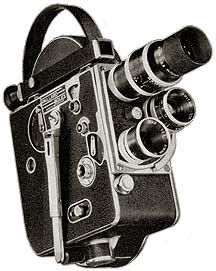
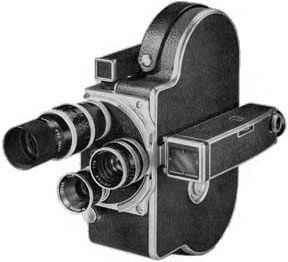
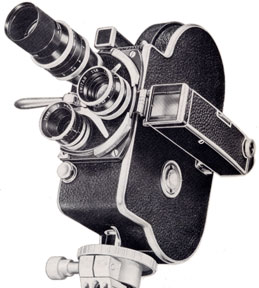
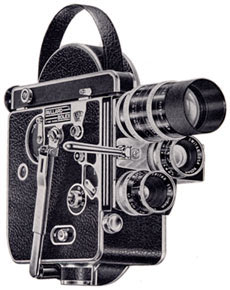
H-16 REX-2
- Format
- 16mm
- Introduced
- 1963
- Original archive
- View preserved page ↗
Serial numbers
- 200,000 – 208,000
- 1963
Bolex International S.A. bulletin, September 1977. Look up a serial
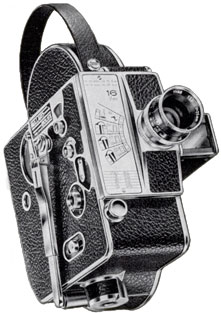
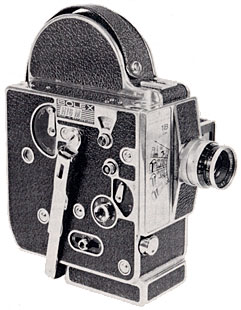
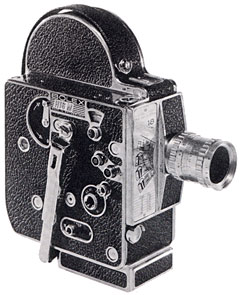
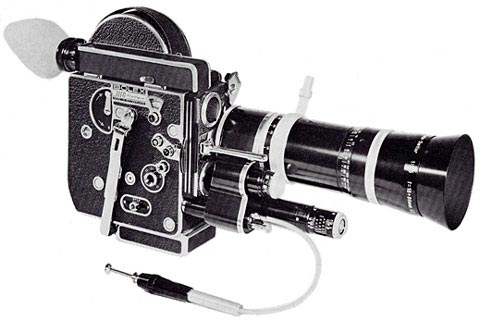
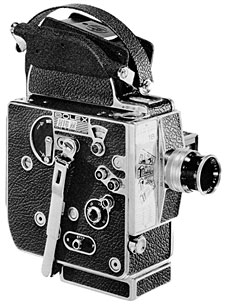
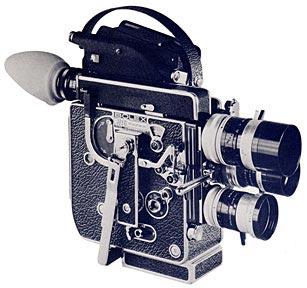
Paillard Bolex H-16 REX-2 reflex camera for 16mm film
At a glance
- Overall Dimensions
- 8 1/2" x 6" x 3"
- Weight
- Approximately 5 1/2 lbs
- Film Capacity
- 100ft (30m) and 50ft (15m) daylight loading spools of 16mm film.
- Variable Speed
- 12, 16, 18, 24, 32, 48 and 64 frames per second
- Tripod Socket
- 3/8" thread
Specifications in detail
- Outer Case
- Highly polished duraluminium body, covered in genuine Morocco leather. Metal parts are chrome-plated.
- Threading
- Automatic threading and loop forming. The end of the film is simply placed in a channel leading to the feed sprocket. The release is pressed and the film is then automatically threaded throughout the entire mechanism.
- Motor
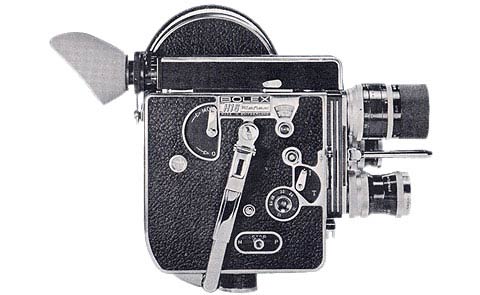
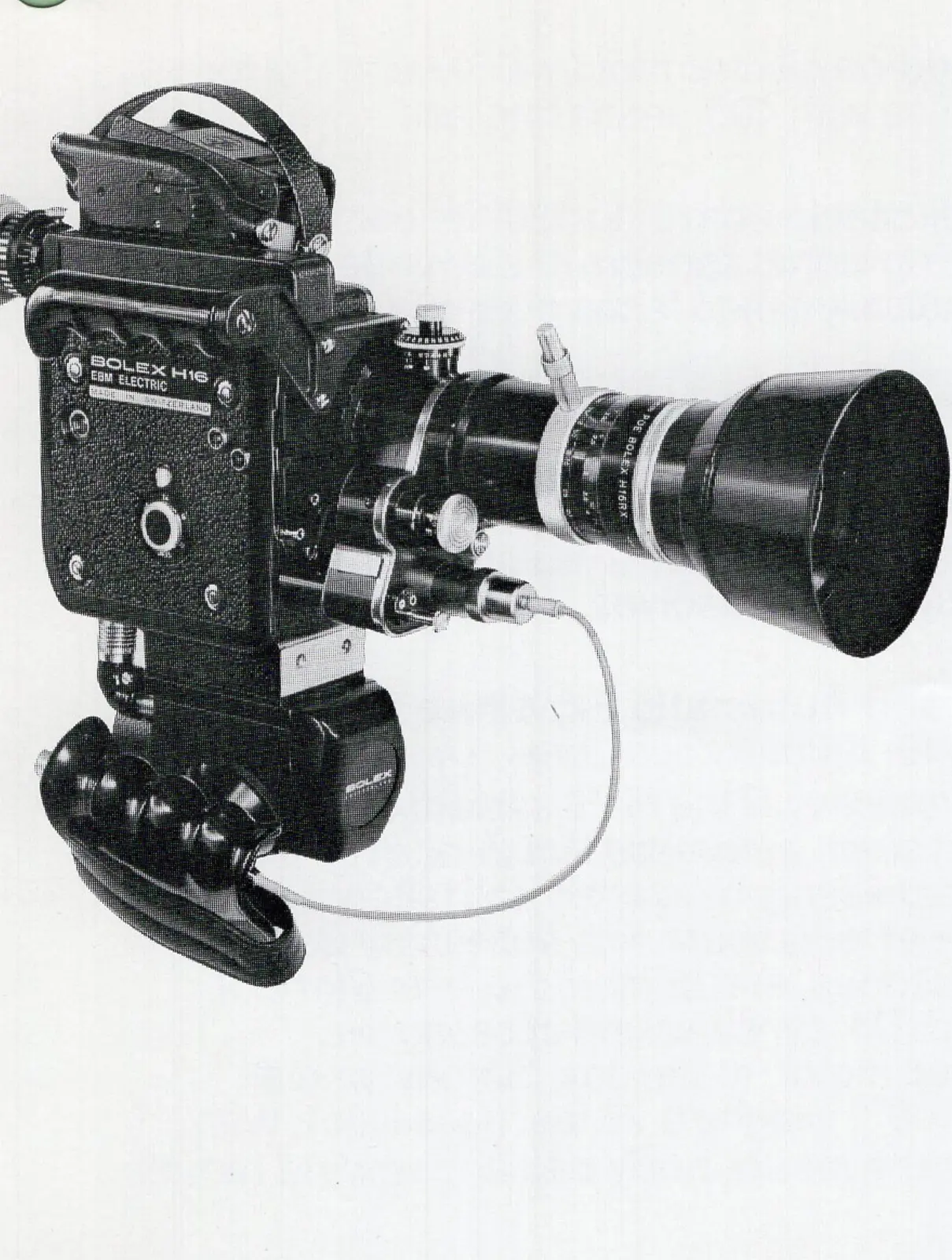
- Constant speed, spring motor mechanism; governor controlled. Large winding handle folds downward and attaches to camera when not in use. Spring cannot be over-wound. 8:1 external drive shaft permits the attachment of an electric motor.
- Turret
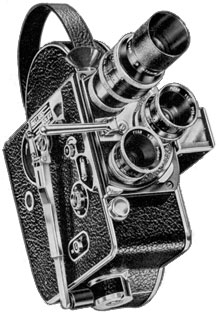
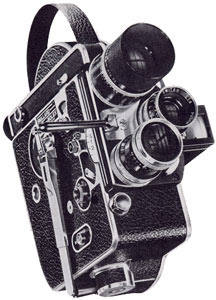
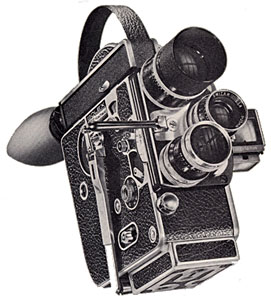
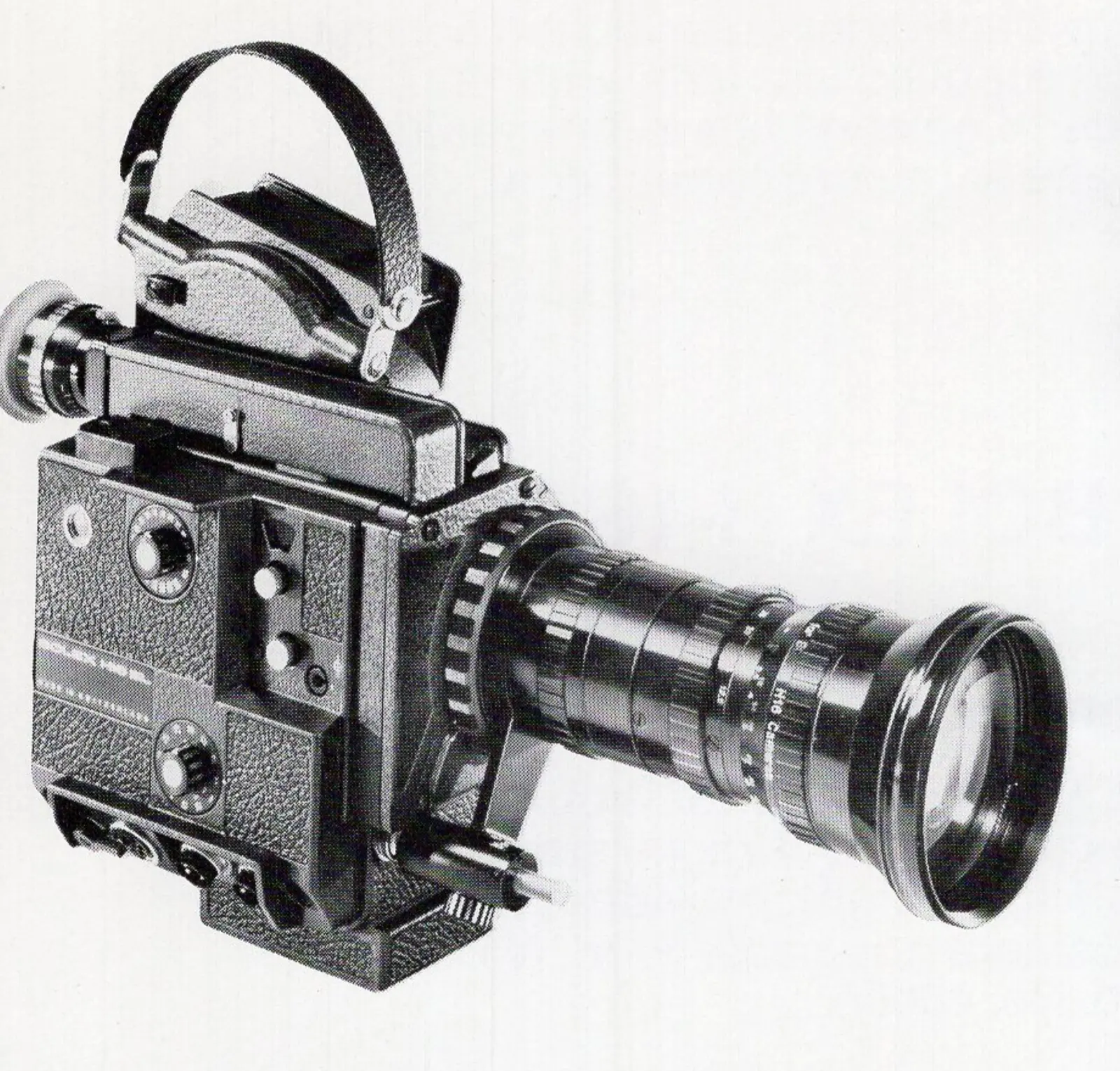
- Rotating turret with folding lever; Accommodates three interchangeable RX type C mount lenses; Built-in turret lock lever.
- Viewfinder
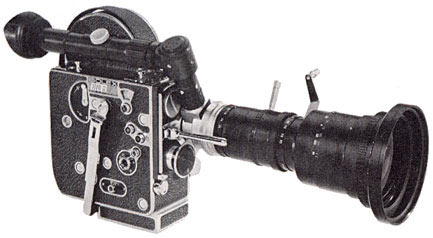
- 10x magnification; Reflex viewing with semi-reflecting prism system; Groundglass focusing; Adjustable to eyesight. The camera comes equipped with an Octometer viewfinder.
- Filter Slot
- Built-in slot holds a gelatin filter behind the taking lens and in front of the shutter.
- Release Button
- provides for the making of continuous exposures by a finger-tip release on the front of the camera. A side release allows for locked, hands-free running or single frame exposures.
- Variable Shutter
- 133 degree variable shutter; Operated manually to decrease exposure time, or with accessory Rexofader to accomplish fade-ins and fade-outs.
- Footage Counter
- adds and subtracts accurately in forward or reverse motion and automatically returns to zero when film is reloaded into the camera.
- Audible Footage Indicator
- A distinct click announces the passing of each 10 inches of film through the gate. This mechanism may be disengaged, if desired, by simply moving a lever.
- Frame Counter
- Twin dial counts frames individually and in total; Adds frames in forward motion and subtracts when film is wound backwards. Dial may be reset manually at any time.
- Single Frame
- Time lapse and animation is possible by using the side release button or an accessory cable release and adapter; I-T lever allows for timed or instantaneous single exposures.
- Manual Rewind
- Clutch disengages spring motor and permits forward movement and backwind without running down the spring; allows for dissolves and superimposition.
Notes and Comments
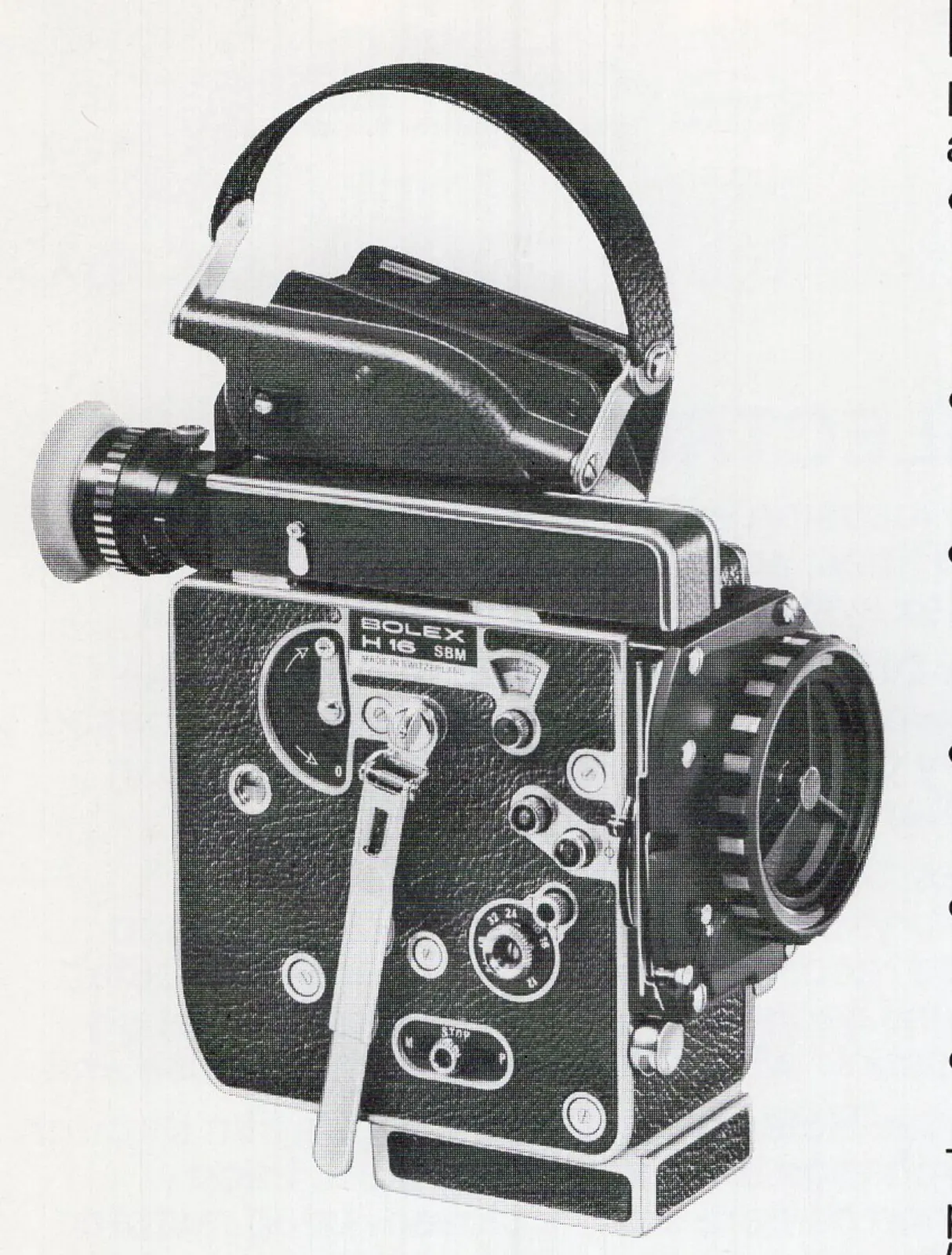
New improvements to the design of the H-16 reflex were introduced in 1963 with the REX-2. These included: A new viewing system featuring an adjustable diopter for eyesight correction; a larger, more flexible rubber eyecup; brighter viewing image; magnification of the image seen through the reflex finder was increased to 10x (1:1 image when seen through a standard focal length lens); a built in turret lock lever (prevented accidental rotation and provided support for heavier lenses); and the addition of a colored signal-marker that appeared in the viewfinder when the shutter was less than fully open.
It seems that very few REX-2 models were manufactured before being superseded by the Bolex H-16 REX-3 later that same year.
Bolex Cameras in the H16 Reflex Series
H16 Reflex, H16 REX, H16 REX-2, H16 REX-3, H16 REX-4 and H16 REX-5.
Identifying features
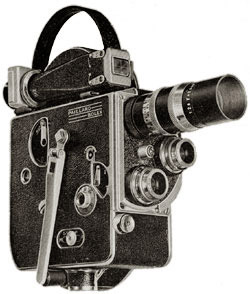
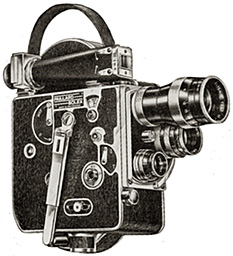
The H16 REX-2 is often mistaken for earlier H16 reflex cameras because they share the same "round base" tripod mount. However, there are several subtle differences in appearance between the REX-2 and earlier models. In addition to the specifications listed above, the REX-2 can be identified by looking at the construction of the viewfinder; this model has an adjustable diopter eyepiece at the rear. The Bolex H16 Reflex logo plate first appeared on this model, but it's not always an indication that the camera is a REX-2; these were sometimes added to earlier reflex cameras during overhaul or repair from Bolex service centers.
The original archive
The preserved BolexCollector.com page, exactly as captured.
Source: Specifications, serial ranges and photographs by Michael Tisdale.
Something wrong, or something to add? Tell us