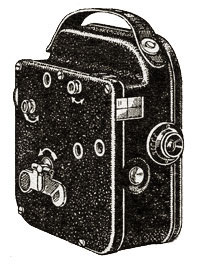
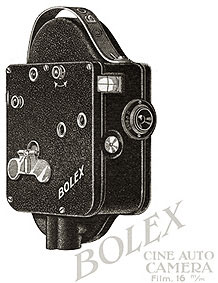
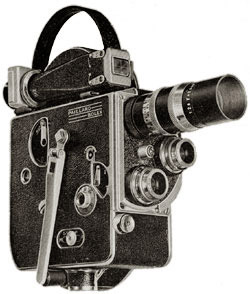
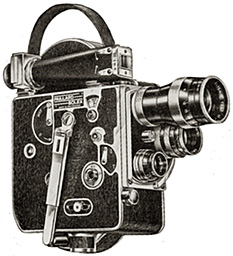
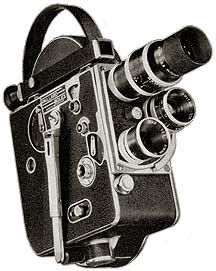
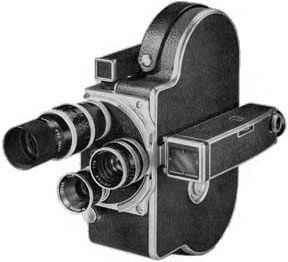
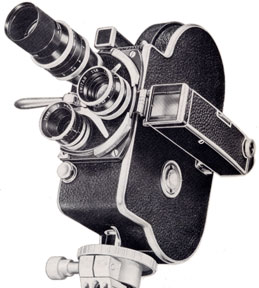
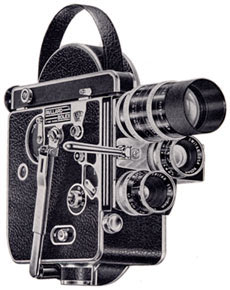
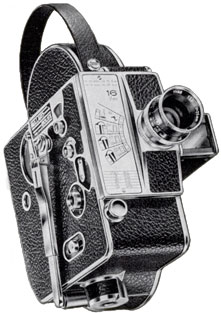
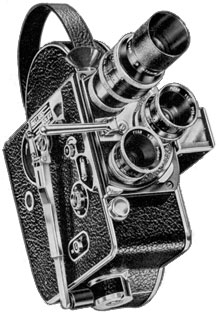
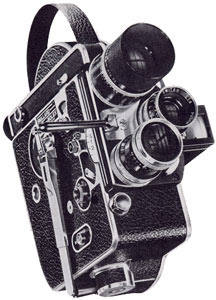
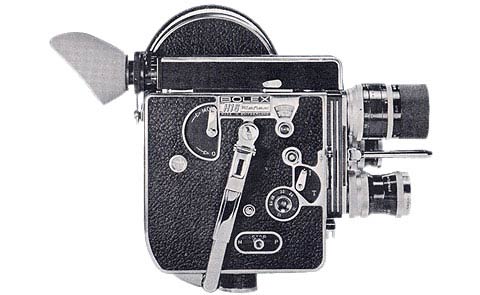
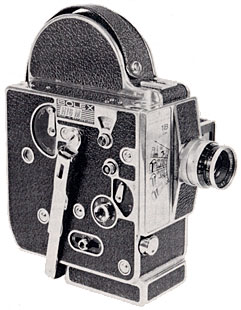
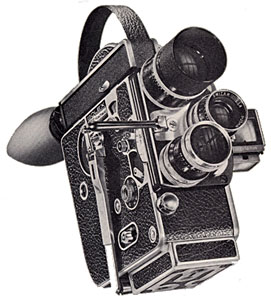
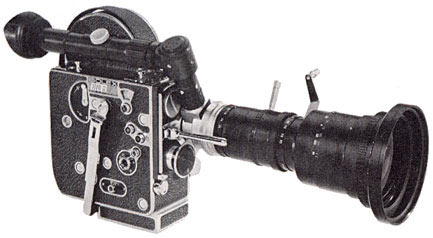
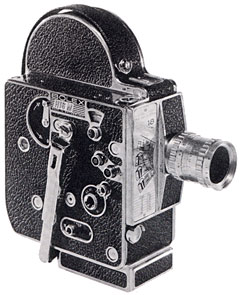
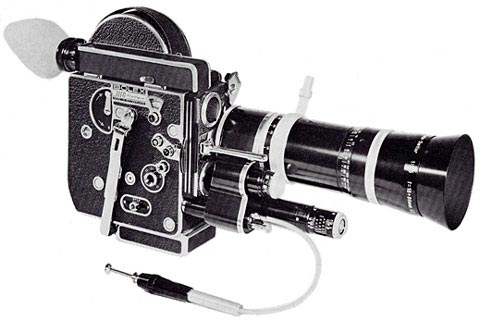
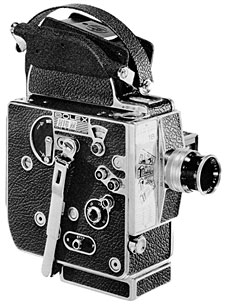
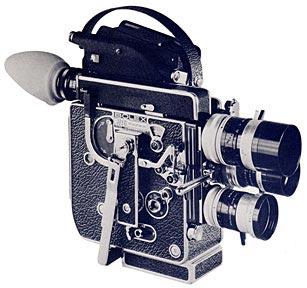
H-16 Leader
- Format
- 16mm
- Introduced
- 1947
- Original archive
- View preserved page ↗
Serial numbers
- 33,200 – 40,000
- 1946–1947
- 40,000 – 50,000
- 1948
- 50,000 – 55,000
- 1949
- 55,000 – 60,000
- 1950
- 60,000 – 70,000
- 1951
- 70,000 – 85,000
- 1952
- 85,000 – 95,000
- 1953
- 95,000 – 105,000
- 1954
- 105,000 – 120,000
- 1955
- 120,000 – 130,000
- 1956
- 130,000 – 150,000
- 1957
- 150,000 – 158,000
- 1958
Bolex International S.A. bulletin, September 1977. Look up a serial
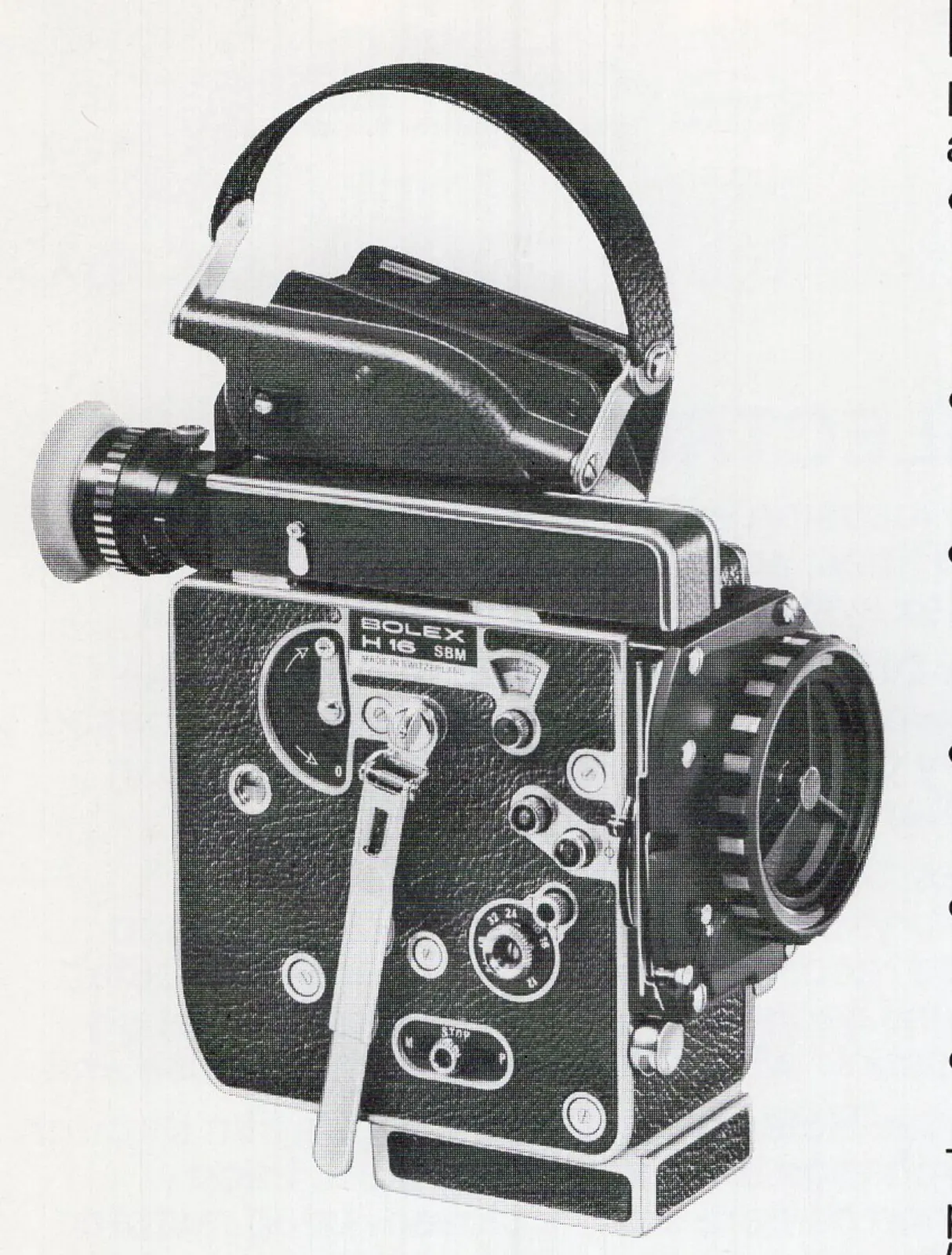
Paillard Bolex H-16 Leader camera for 16mm film
At a glance
- Overall Dimensions
- 8 1/2" x 6" x 3"
- Weight
- Approximately 5 1/2 lbs
- Film Capacity
- 100ft (30m) and 50ft (15m) daylight loading spools of 16mm film.
- Variable Speed
- 8, 16, 24, 32 and 64 frames per second
- Shutter
- 190 degree aperture shutter
- Tripod Socket
- 3/8" thread
Specifications in detail
- Outer Case
- Highly polished duraluminium body, covered in genuine Morocco leather. Metal parts are chrome-plated.
- Threading
- Automatic threading and loop forming. The end of the film is simply placed in a channel leading to the feed sprocket. The release is pressed and the film is then automatically threaded throughout the entire mechanism.
- Motor
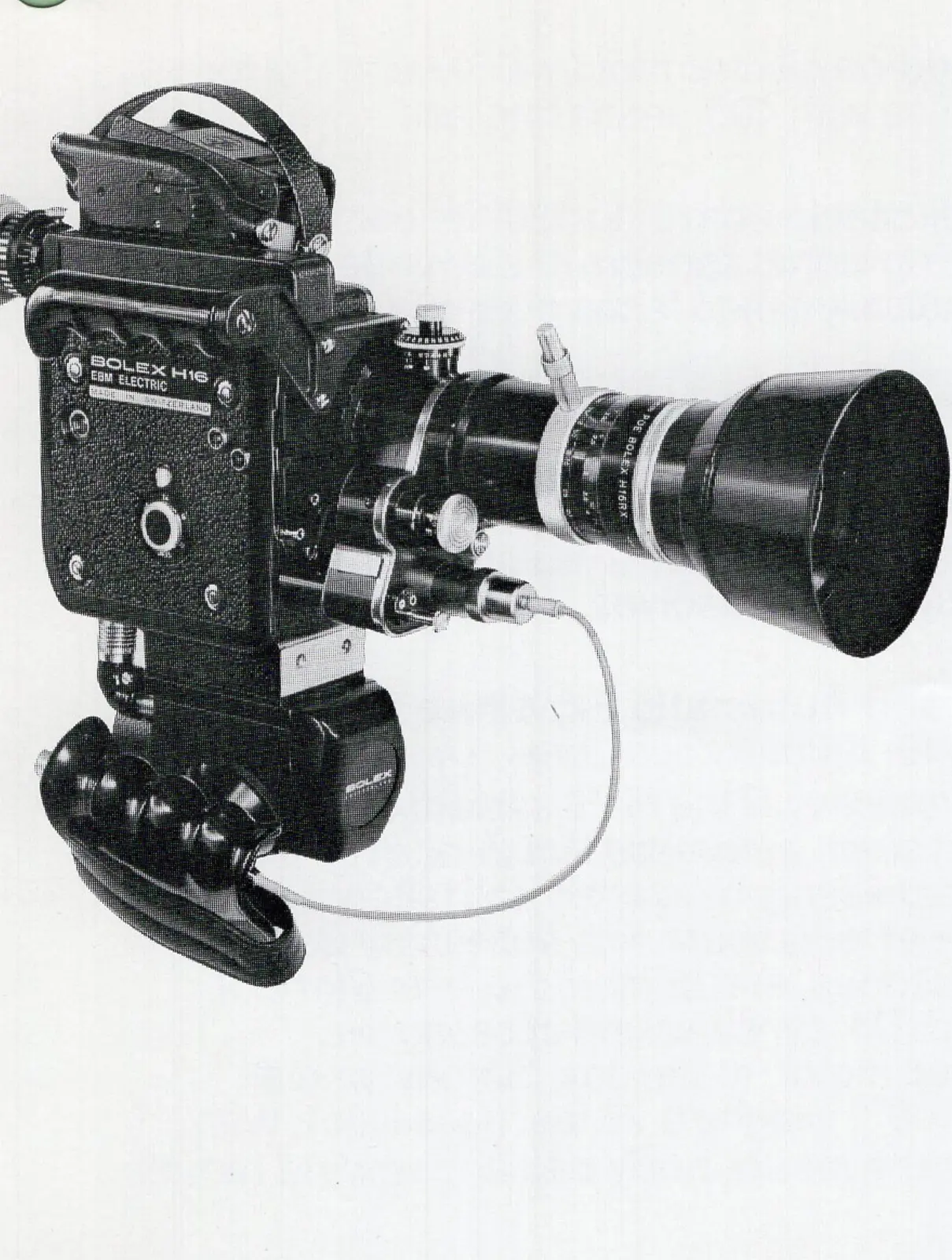
- Constant speed, spring motor mechanism; governor controlled. Large winding handle folds downward and attaches to camera when not in use. Spring cannot be over-wound. 8:1 external drive shaft permits the attachment of an electric motor.
- Turret
- Rotating turret accommodates three interchangeable C mount lenses. The top position allows for critical focusing through a magnified groundglass screen.
- Viewfinder
- Tri Focal viewfinder gives an exact viewing field for lenses of 3 focal lengths. A cupped eyepiece allows for critical focusing through a groundglass screen.
- Release Button
- provides for the making of continuous exposures by a finger-tip release on the front of the camera. A side release allows for locked, hands-free running or single frame exposures.
- Footage Counter
- adds and subtracts accurately in forward or reverse motion and automatically returns to zero when film is reloaded into the camera.
- Audible Footage Indicator
- A distinct click announces the passing of each 10 inches of film through the gate. This mechanism may be disengaged, if desired, by simply moving a lever.
- Frame Counter
- Twin dial counts frames individually and in total; Adds frames in forward motion and subtracts when film is wound backwards. Dial may be reset manually at any time.
- Single Frame
- Time lapse and animation is possible by using the side release button or an accessory cable release and adapter; I-T lever allows for timed or instantaneous single exposures.
- Manual Rewind
- Clutch disengages spring motor and permits forward movement and backwind without running down the spring; allows for dissolves and superimposition.
Notes and Comments
A built-in frame counter was added to all H model cameras after serial number 33200. [1] The H-16 "Leader" was sold with a trifocal viewfinder (inscribed with a serial number identical to the camera body) and a cupped eyepiece used for critical focusing. Other changes include the removal of the key wind slot and the addition of a film plane mark on the right side of the camera body.
Early instruction manuals suggest that the H camera with internal frame counter was originally designed with both key and crank winding; illustrations also show the camera having a black colored dial, instead of the standard white. However, this style does not seem to have been produced after 1947.
The solid-piece winding crank, used on early H models, was replaced with a collapsible style crank.
The "Leader"
I hesitate to use this term. This camera was not actually known as the "Leader" when it was first introduced; at the time, it was simply called a model H (H-8 or H-16). The term Leader comes from Paillard Products of New York, who later used it as a marketing term in the United States beginning in 1950 (with the introduction of the DeLuxe).
Because the terms Leader, Standard and Deluxe were used extensively in American advertising up until the mid 1950s (and is even described as such on original sales receipts, sometimes found in old cases or boxes along with the camera), I feel it's helpful to identify the differences.
However, these terms were only used to differentiate between models that included different styles of viewfinder accessories. These viewfinders could be purchased or installed later; a fact which, today, makes it nearly impossible to identify early H cameras as Leader, Standard or Deluxe.
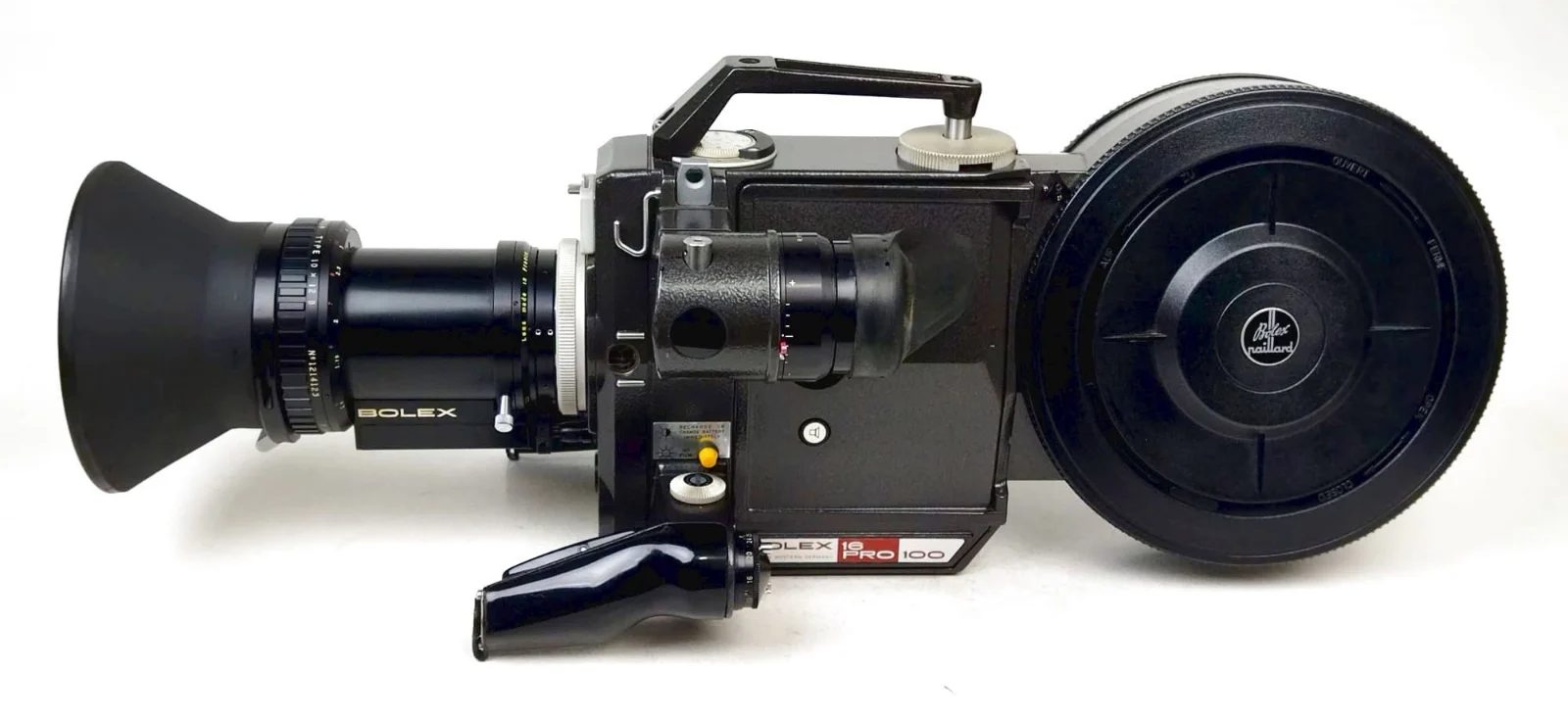
Bolex cameras in the H16 non-reflex series
H-16, H-16 Leader, H-16 Standard, H-16 Deluxe, H-16 Supreme, H-16 T and H-16 S. (See also: the Bolex H-16 M series.)
- 1 "Maintenance and Repair of the Bolex H Camera", Paillard Ltd., 16-H-10.55.
The original archive
The preserved BolexCollector.com page, exactly as captured.
Source: Specifications, serial ranges and photographs by Michael Tisdale.
Something wrong, or something to add? Tell us