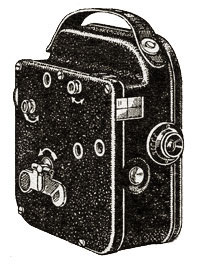
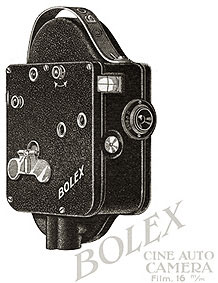
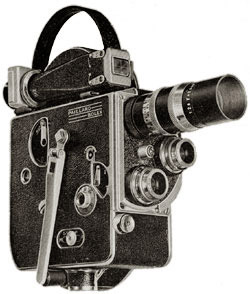
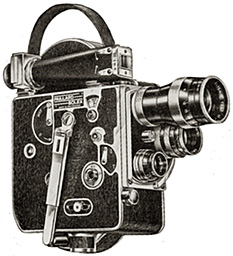
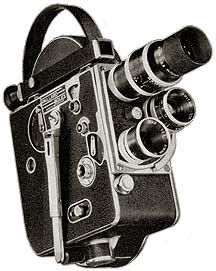
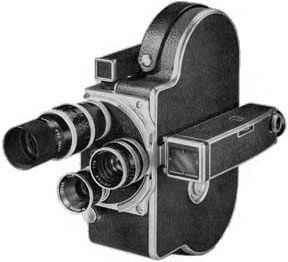
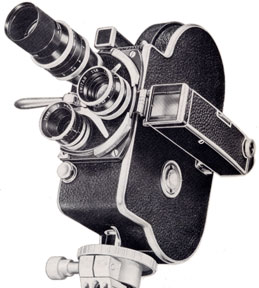
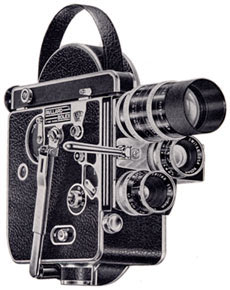
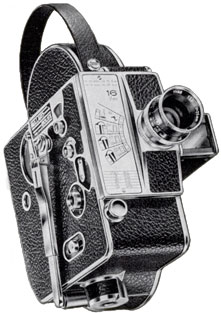
H-16
- Format
- 16mm
- Introduced
- 1935
- Original archive
- View preserved page ↗
Serial numbers
- 7,510 – 10,000
- 1936–1937
- 10,000 – 15,000
- 1938–1940
- 15,000 – 20,000
- 1941–1943
- 20,000 – 25,000
- 1944
- 25,000 – 30,000
- 1945
- 30,000 – 33,200
- 1946–1947
Bolex International S.A. bulletin, September 1977. Look up a serial
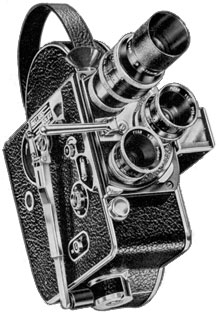
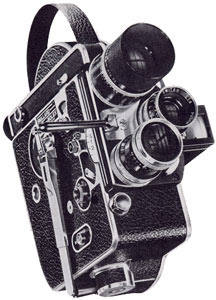
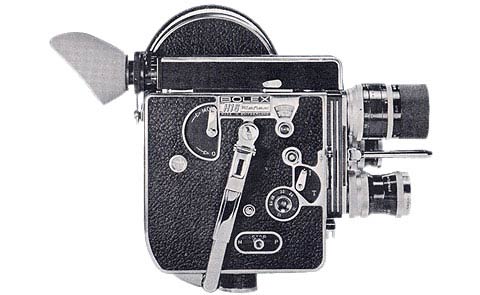
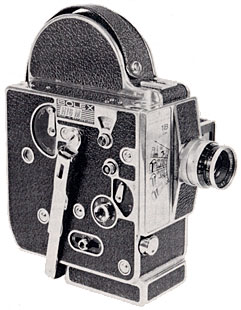
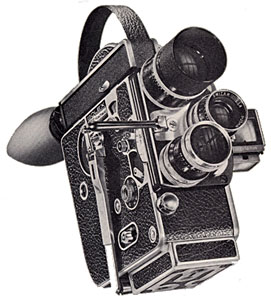
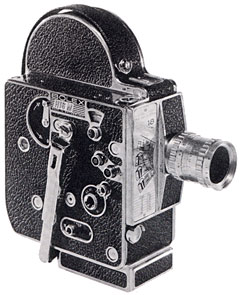
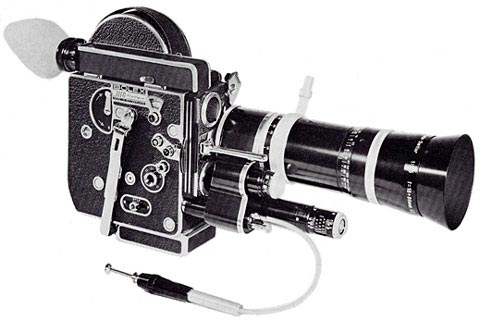
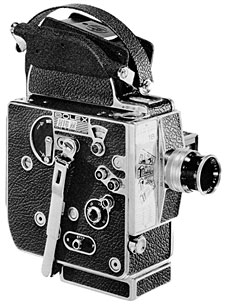
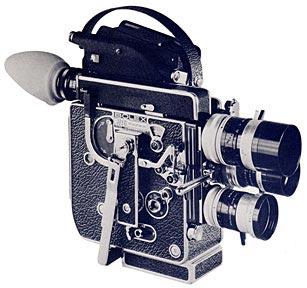
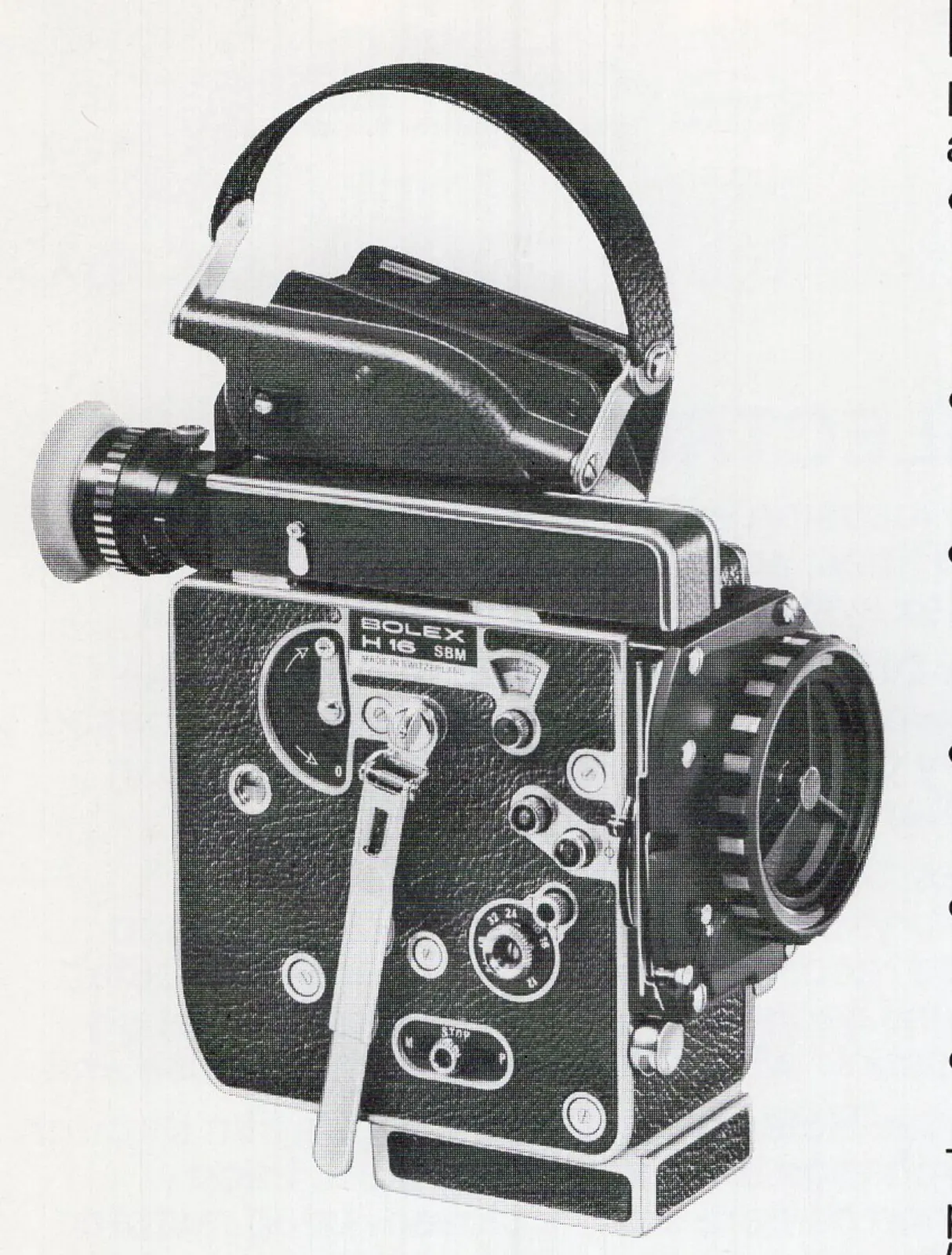
16mm camera taking 100ft (30m) and 50ft (15m) daylight loading spools, with automatic threading and loop forming, a constant-speed spring motor, and a rotating turret accommodating three interchangeable C-mount lenses.
At a glance
- Overall Dimensions
- 8 1/2" x 6" x 3"
- Weight
- Approximately 5 1/2 lbs (without lenses)
- Film Capacity
- 100ft (30m) and 50ft (15m) daylight loading spools of 16mm film.
- Tripod Socket
- 3/8" thread
Specifications in detail
- Outer Case
- Highly polished duraluminium body, covered in genuine Morocco leather. Metal parts are chrome-plated.
- Threading
- Automatic threading and loop forming. The end of the film is simply placed in a channel leading to the feed sprocket. The release is pressed and the film is then automatically threaded throughout the entire mechanism.
- Motor
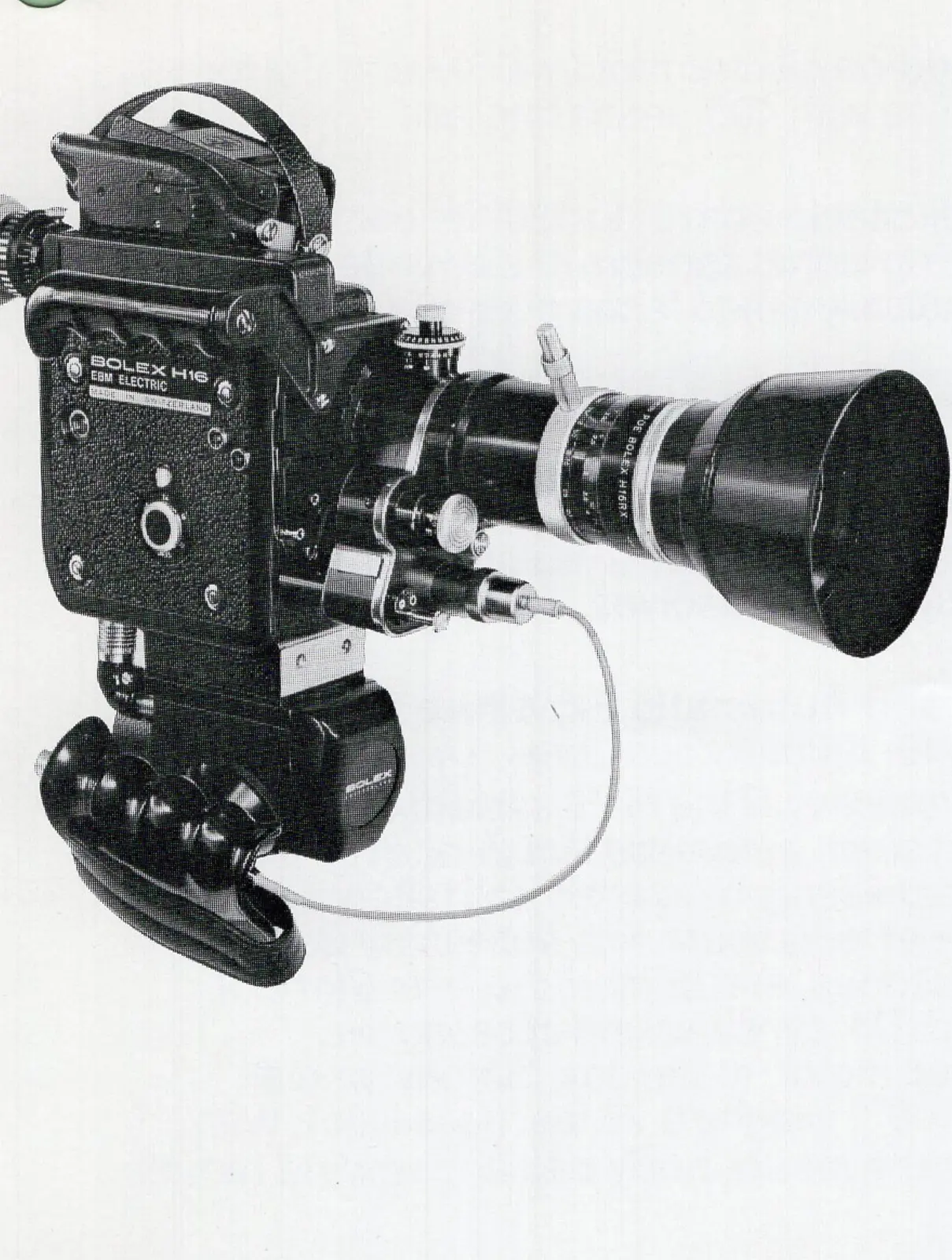
- Constant speed, spring motor mechanism; governor controlled. Large winding handle folds downward and attaches to camera when not in use. Spring cannot be over-wound. 8:1 external drive shaft permits the attachment of an electric motor.
- Turret
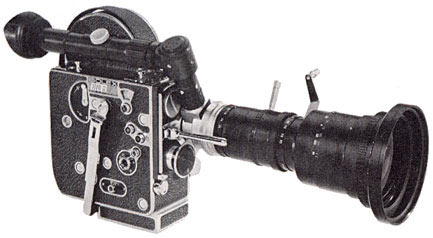
- Rotating turret accommodates three interchangeable C mount lenses. The top position allows for critical focusing through a groundglass screen on later versions of this model.
- Viewfinder
- accessory Tri Focal viewfinder gives an exact viewing field for lenses of 3 focal lengths. Later versions of this model had a built-in critical focus viewer with optional cupped eyepiece.
- Variable Speed
- 8, 16, 24, 32 and 64 frames per second with the ability to change speeds while the camera is running.
- Release Button
- provides for the making of continuous exposures by a finger-tip release on the front of the camera. A side release allows for locked, hands-free running or single frame exposures.
- Shutter
- 190 degree disc shutter, operates at 118/1000 of an inch from emulsion side of film with an exposure rate of 1/30 second at 16 fps.
- Footage Counter
- adds and subtracts accurately in forward or reverse motion and automatically returns to zero when film is reloaded into the camera.
- Audible Footage Indicator
- A distinct click announces the passing of each 10 inches of film through the gate. This mechanism may be disengaged, if desired, by simply moving a lever.
- Frame Counter
- An accessory frame counter could be attached to the motor crank shaft. Two separate counters registered increments of single frames and 50 frames as the film progressed.
- Single Frame
- Time lapse and animation is possible by using the side release button or an accessory cable release and adapter; I-T lever allows for timed or instantaneous single exposures.
- Manual Rewind
- Clutch disengages spring motor and permits forward movement and backwind without running down the spring; allows for dissolves and superimposition.
Notes and Comments
By 1930, Jacques Bogopolsky had sold the Bolex patents to Paillard of Yverdon Switzerland; a manufacturer of Hermes typewriters and other products, as well as distributor of Thorens gramophones and phonographs. Paillard-Bolex was formed as the cine division of Paillard.
The Bolex H-16 was introduced in 1935. The design appears to have been loosely based on the Bolex Auto Cine B. However, apart from the shape and a few similar functions, it was a radically different camera. Among the most notable improvements was the addition of a three lens turret and variable speed dial. Over the next decade, the H-16 saw several alterations.
Early Modifications
Winding Handles The spring motor of the original H-16 was designed to be wound with a winding crank or key; early instruction manuals seem to suggest the camera was supplied with either one or the other, but not both.
The winding crank supplied with the original camera was designed as a single piece, with a large square lug bolt. This "stiff crank" design could not be used to wind the motor while the turret was swung out. A collapsible-style crank was supplied with the external frame counter; it was attached to an extended crank shaft that provided clearance of the counter during winding.
1937 -- Critical Focus The H-16 used an accessory trifocal viewfinder, which could be attached to the side or the top, but the original camera had no provision to allow critical focusing.
A critical visual focuser was added at some point in 1936 or 1937, consisting of a reflecting prism and groundglass screen built into the area behind the top lens position. This allowed viewing and focusing to be done through any lens swung into the top turret position. After the lens was properly focused, it could be moved back to the taking position for filming. A cupped eyepiece was available that magnified the image seen in the critical focuser.
1938 -- Logo Plate The earliest H-16 cameras, manufactured before serial number 9400 had the Paillard-Bolex logo embossed directly into the leather. Cameras manufactured after #9400 were constructed with a metal logo plate attached with two screws. [1]
This addition was more than a cosmetic change, however, as it allowed for easy attachment of the Bolex external frame counter. The frame counter could also be used on the earlier version of the H-16, but it required a modification from a Bolex service facility. [2]
By 1940, H-16 cameras were sold with the external frame counter already attached.
Bolex cameras in the H16 non-reflex series
H-16, H-16 Leader, H-16 Standard, H-16 Deluxe, H-16 Supreme, H-16 T and H-16 S. (See also: the Bolex H-16 M series.)
- 1 "Bolex Mail Order Bulletin," American Bolex Company, 1942, 7.
- 2 Ibid., 7.
The original archive
The preserved BolexCollector.com page, exactly as captured.
Source: Specifications, serial ranges and photographs by Michael Tisdale.
Something wrong, or something to add? Tell us