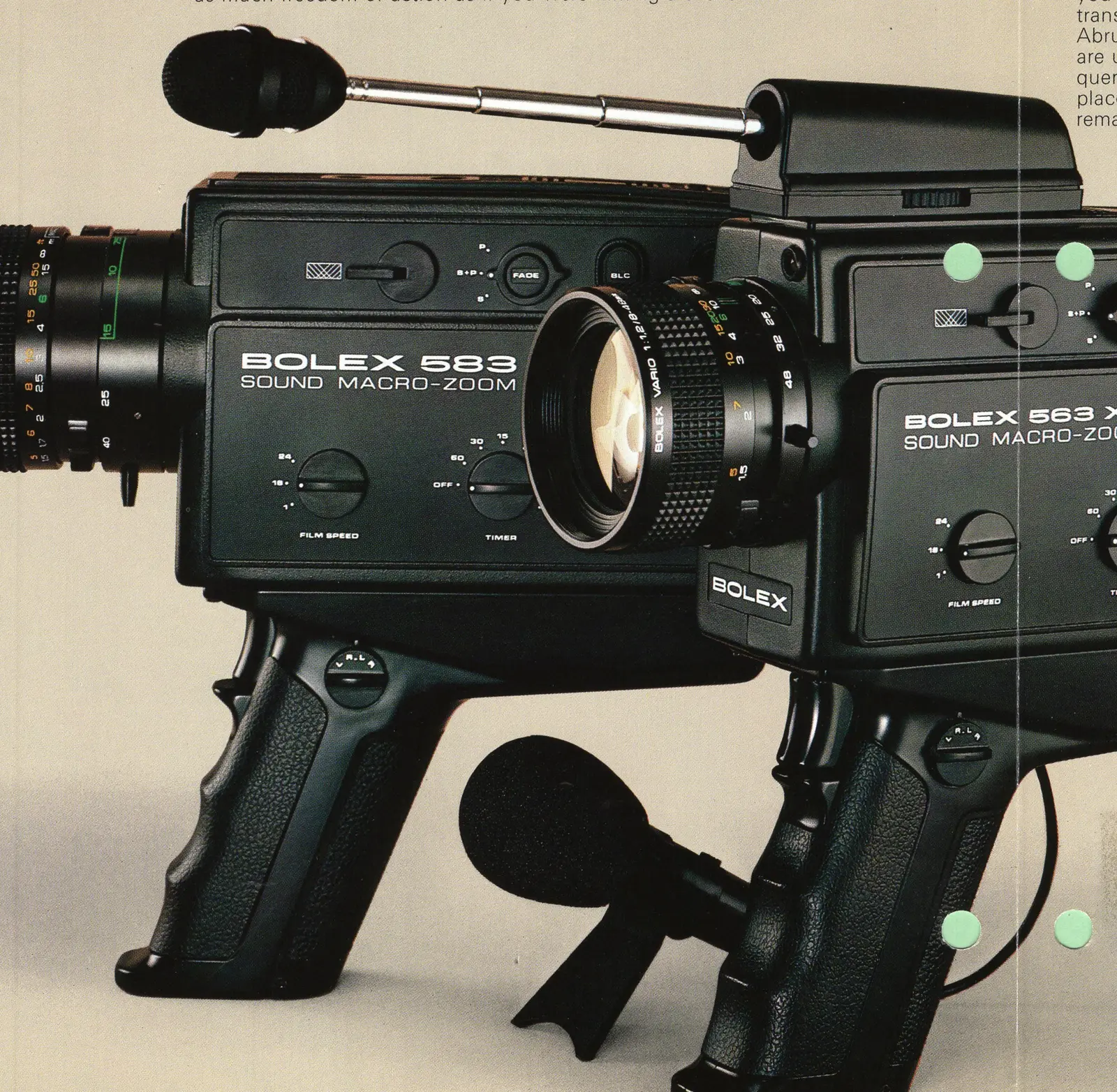
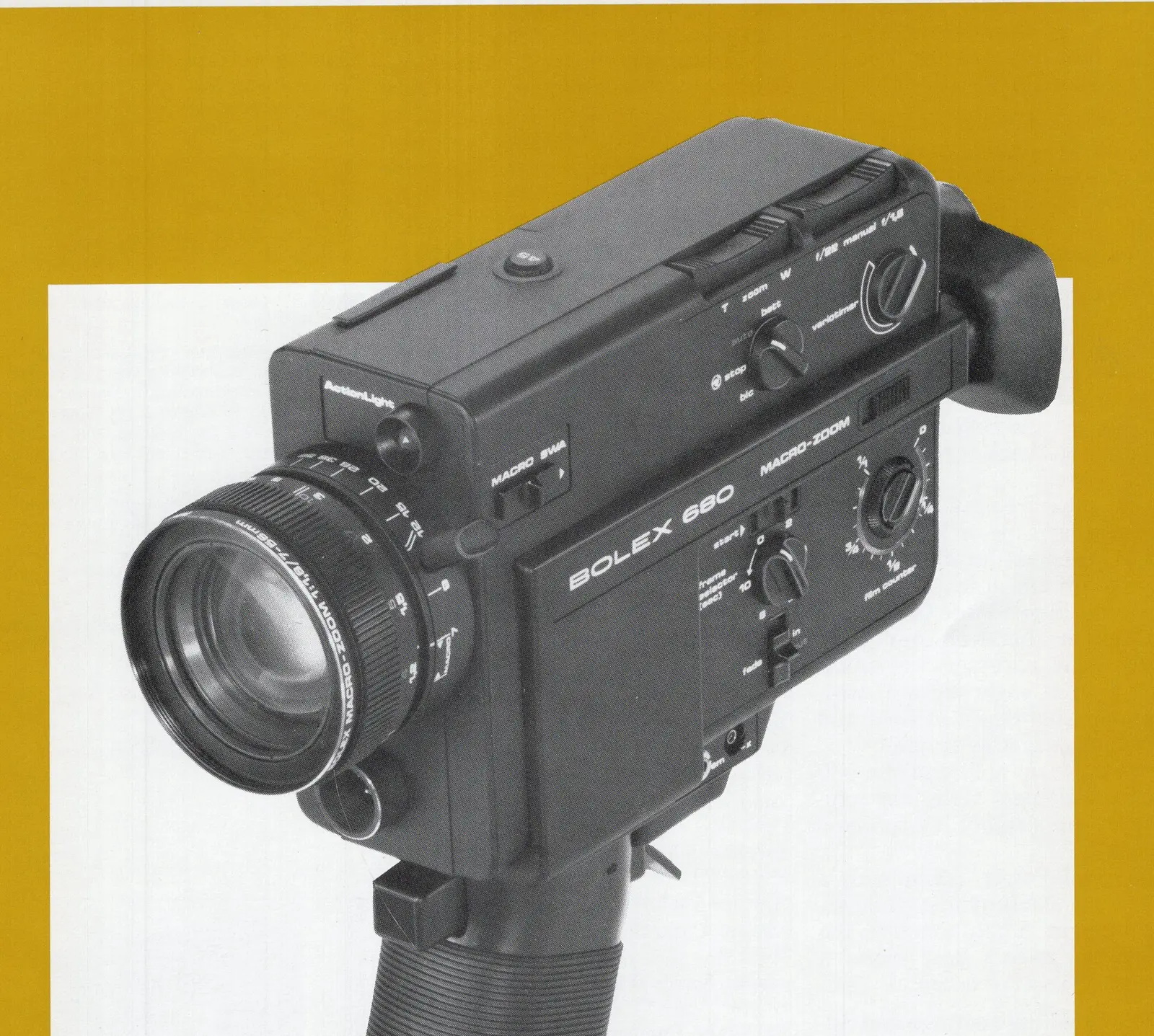
5122 Sound Macrozoom
- Format
- Super 8
- Introduced
- 1977
Serial numbers
Bolex published no serial table for the Super 8 cameras and projectors. The September 1977 bulletin numbers the Swiss-built H, B, C, D and L machines only, and these were built by Eumig and by Chinon.
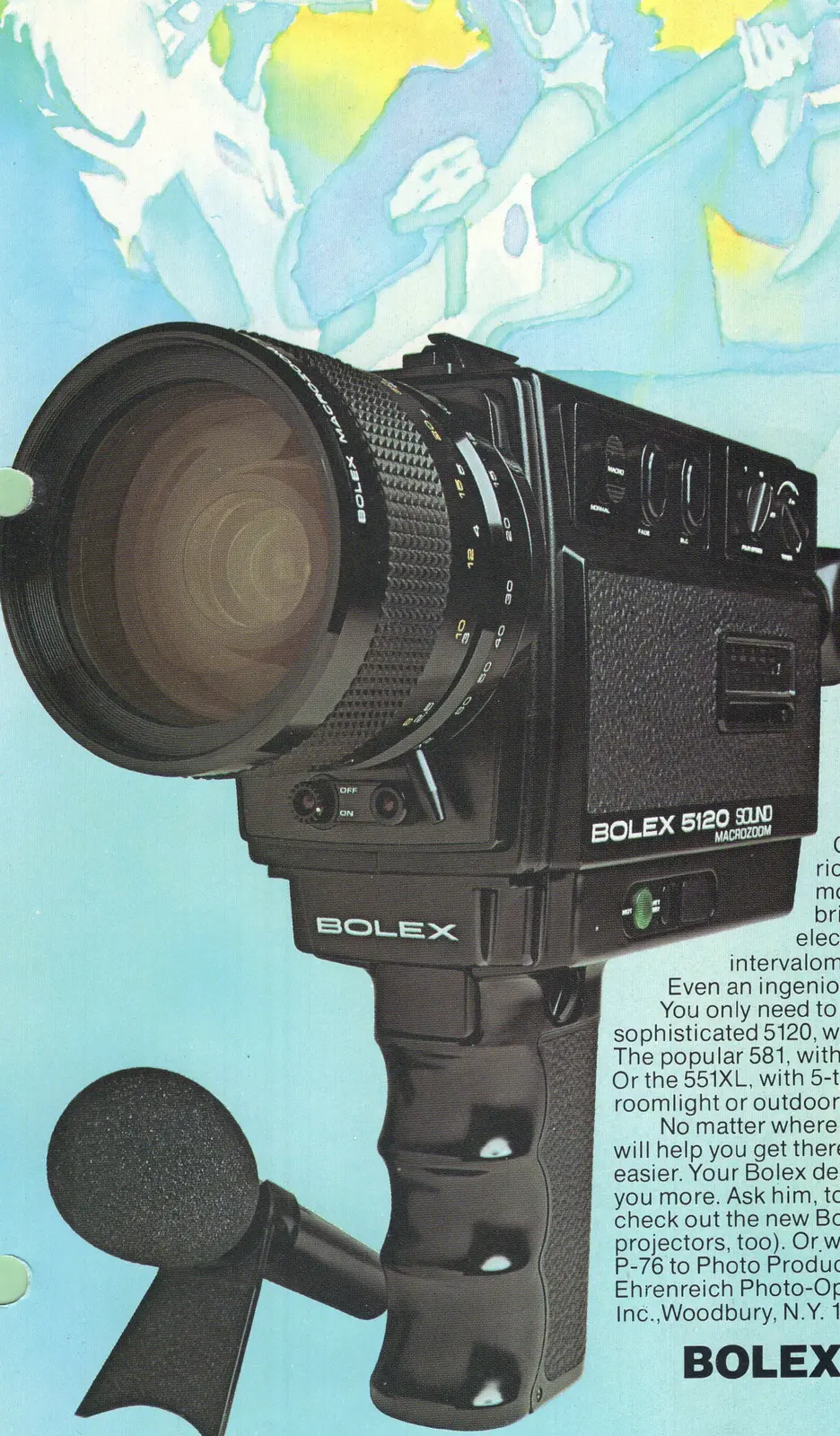
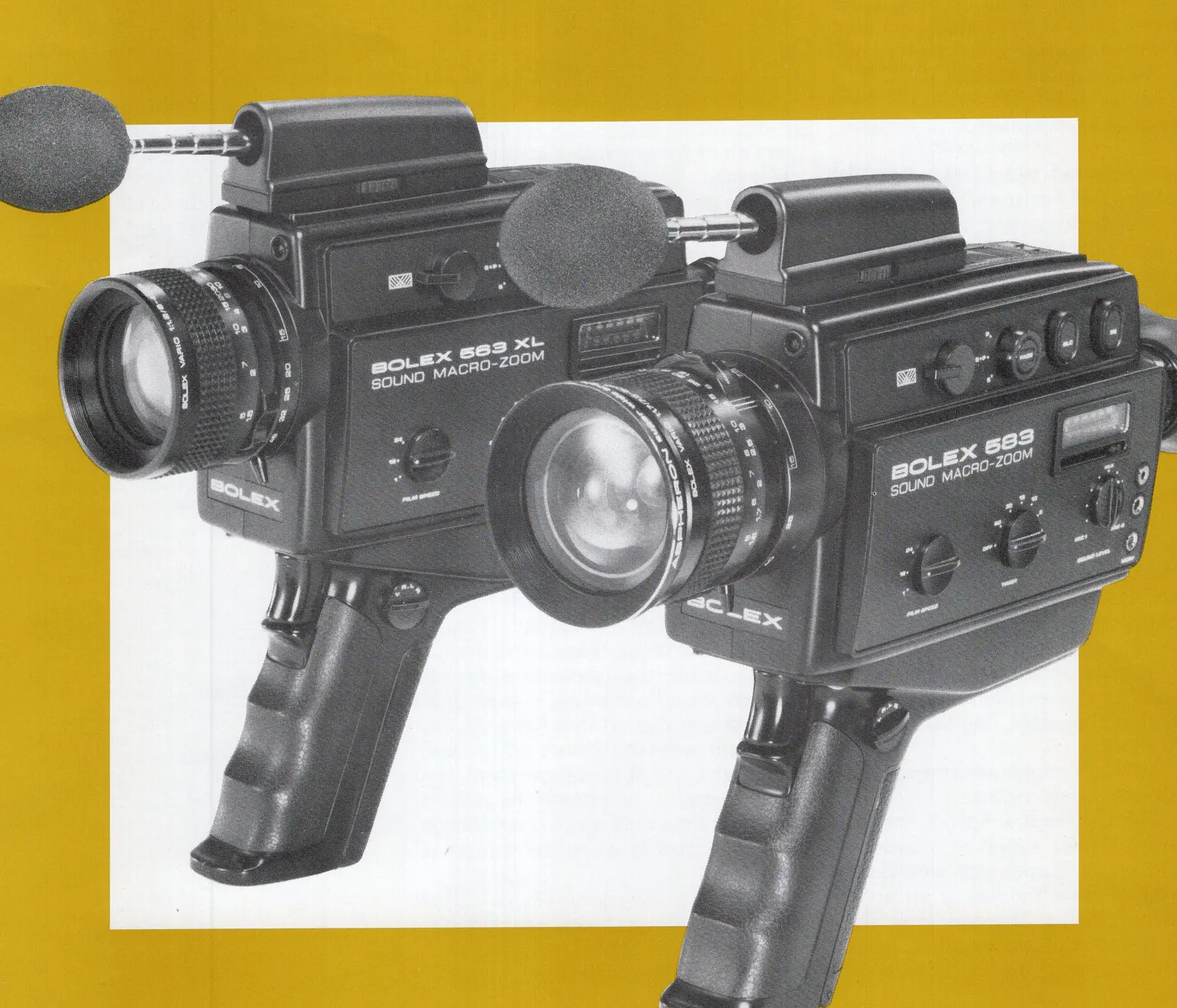
The 5120's successor and the last of the Sound-8 flagships. A 6 to 72mm f/1.8 Macrozoom, twelve to one like the 5120 before it, focusing into macro. Three speeds at 18, 24 and 36 frames a second plus single frame, a 120 degree shutter, exposure automatic or manual on a through-the-lens cell with compensation, film speed read from the cartridge, and both an 85A conversion filter and a neutral density filter built in. Fades run themselves in and out, and an interval timer covers one second to sixty. Sound is recorded single-system onto the film's own stripe, levelled automatically or by hand against a meter. 2400g, and 75 by 225 by 230mm. $887.00 in April 1979, the dearest Super 8 camera Bolex sold.
Source: Added since. Michael Tisdale never covered this model; it was researched for this edition.
- Bolex Super 8 Cameras and Projectors, price list no. S1, 1 April 1979: Bolex (U.S.A.) Inc.'s own list, one Suggested Retail column, read off the rendered page. The scan's text layer runs neighbouring model numbers into their lens specifications and invents models that never existed, so it cannot be used here.
- Super8Data: A collector database, so secondary, and the source of everything here except the price. It dates the camera to 1977 and says it was made in Japan by Chinon, which is worth knowing: the Sainte-Croix cameras and the Austrian projectors are the Bolex story people tell, and by the late 1970s the Super 8 cameras were being built somewhere else again.
Something wrong, or something to add? Tell us